Features

Everything Mantis does — today.

Six tools, one chart engine, one closed stitch vocabulary. Built for crocheters who want the math right and the AI on a leash.

A library that knows what a pattern is.

Save every pattern you import or build — with folders, tags, notes, cover photos, and search by designer, yarn, hook, or stitch. Multi-device sync via Supabase. Offline access on iPad and Android via PWA, no app-store gate.

Library entries aren’t just PDFs — they’re editable charts with metadata Mantis can do math on. That’s what makes yardage, cooking mode, and the other tools actually work.
A real chart editor underneath everything.

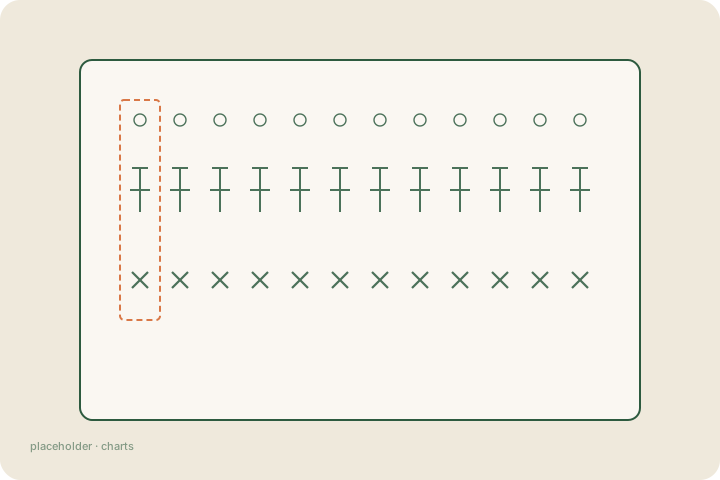
About thirty stitches in a closed vocabulary, defined once. Drag, snap, group, copy, rotate, export to PDF / PNG / SVG. Polar and in-the-round layouts handled natively. Smart pagination tiles big charts across letter pages with registration marks.

Every other Mantis feature talks to the same chart engine — so the chart you see in cooking mode is the chart you placed in the editor, with the same coordinates and the same stitch semantics. No translation layer to drift between.

Import from where the pattern lives.

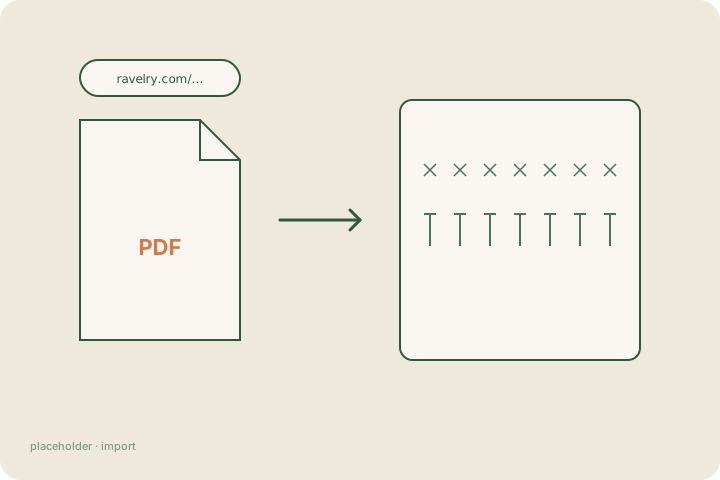
Local PDF, PDF-by-URL, pasted text, Ravelry-source web pages — Mantis turns each into an editable chart with the designer’s metadata preserved. Text-readable PDFs use the parser; image-only PDFs route through vision OCR with a per-tier monthly cap.

Source attribution stays on the pattern. Designer permissions default restrictive on imported work — personal use always allowed, sharing and modification gated until the designer registers and grants them.

Cooking mode that doesn’t lose your place.

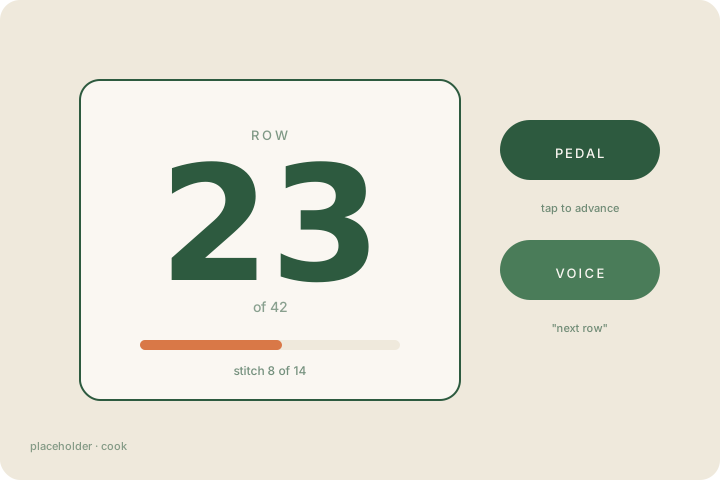
Big-tap row advance, per-stitch granularity, persistent counters across devices. Chart-only, written-only, or split view. Voice control over Web Speech API — “next row”, “where am I”, “pause” — works on iPad and Android with the screen off.

Bluetooth foot pedal support, too. Pair any AirTurn / PageFlip / iRig-style pedal as a Bluetooth keyboard and map it to advance, back, or pause. Hands stay on the hook and yarn.

Yardage math you can trust.

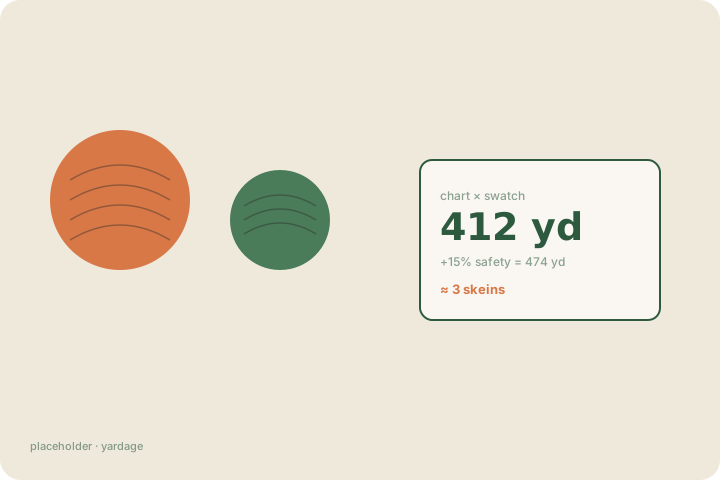
Crochet a swatch in the actual yarn and hook, weigh it, and Mantis back-solves per-stitch yardage. Apply that to the chart’s real stitch composition and you get a yardage number that accounts for what you’re actually making — not just “chart area times average density.”

Hook size and yarn weight converters (US / metric / UK / CYC), cost-per-project from stash + yarn database prices, and skein math with a configurable safety margin. The default is 15% — enough to absorb dye-lot variance without overbuying.

Swatches that pay you back.

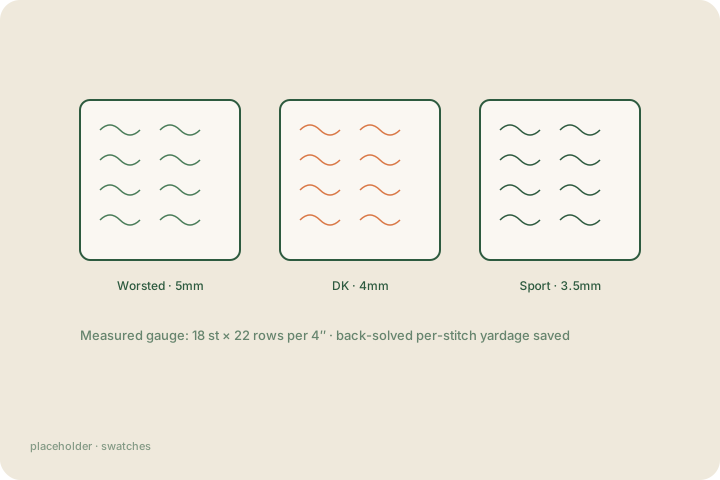
Every swatch you record in Mantis becomes a calibration point for yardage and time estimates on future projects in the same yarn / hook combination. It’s the same swatch you’d crochet anyway — Mantis just remembers it.

Pair with the yarn database (30 seeded yarns, growing) and your personal stash so substitution suggestions and project-cost estimates come from data, not guesses.

Coming soon

On the roadmap.

We’d rather ship narrow things that work than wide things that wobble. Here’s what’s next.

Pattern Validator

Stitch counts add up before you cast on, not row 14 into the project.

Designer permissions UI

Designer accounts via Ravelry OAuth, per-pattern permission toggles.

Smart Convert

Scan a printed chart photo, get an editable chart back. Phase 2.

Mobile apps

Capacitor wraps for App Store and Play Store. Phase 1 launch target.

See the plans or read about who built it.